
Resilient America Summit Final Report
Introduction
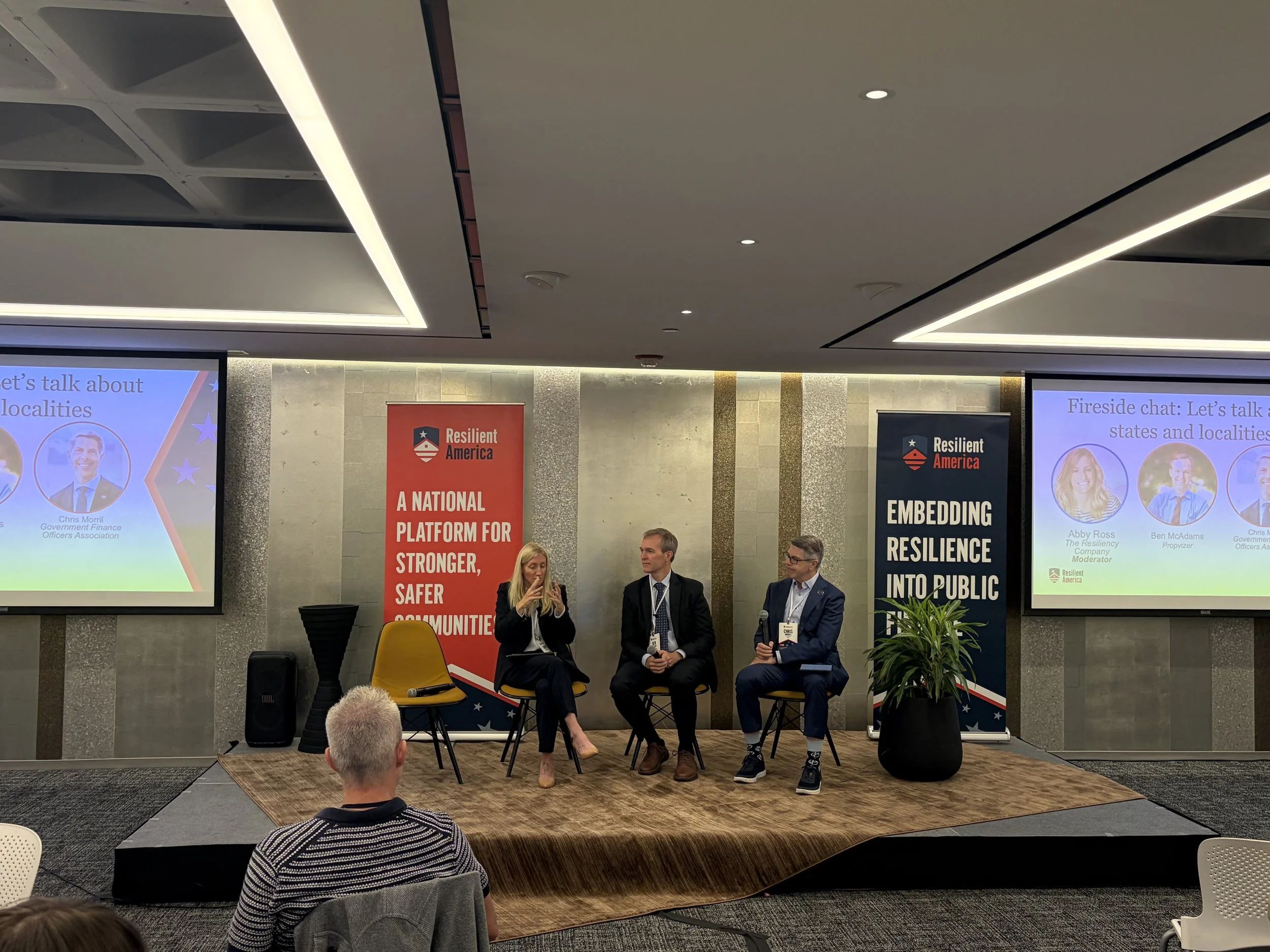
On July 23 at the inaugural Resilient America Summit in Chicago, over 100 public and private sector leaders gathered to spend the day answering one question:
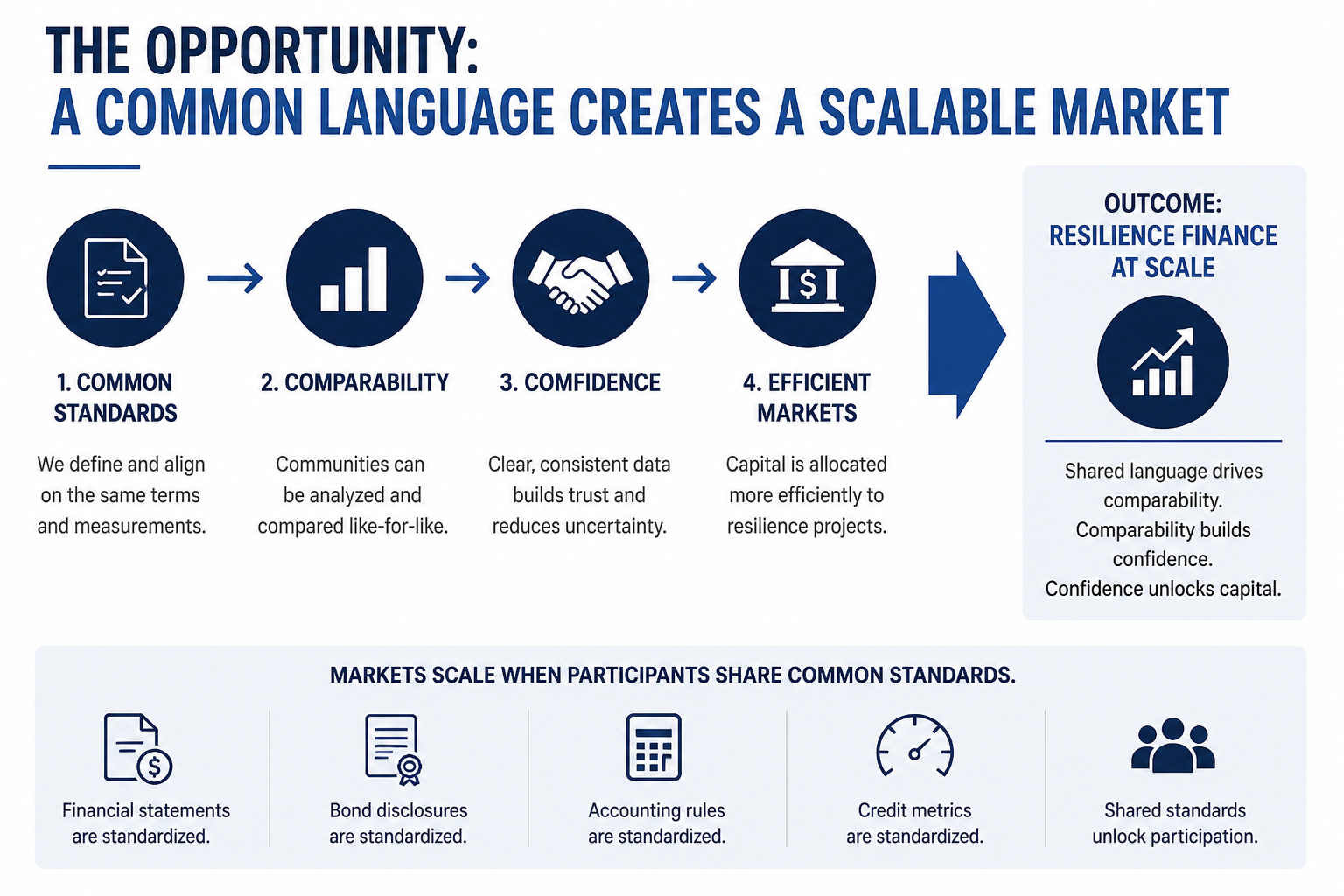
What will it take to move resilience from a recognized need to something communities can actually finance and deliver at scale?
Three things in particular stood out from the day:
1. Nobody is working on this alone. Attendees came from every corner of city and county government, public finance, insurance, philanthropy, investment and delivery – all focused on the problem of implementing resilience solutions. Every workshop table finished with a list of introductions to make, tools to demo, and calls to set up. The resilience community that we’ve started to build here can be a valuable source of ideas, inspiration, and validation for all of us.
→ Find a full list of attendees at the end of this document.→ Interested in holding a one-day Resilient America workshop in your community? Reach out to us at America@resiliency.com
2. There are emerging innovative solutions and new ideas taking shape across the country that can serve as case studies. Reserves as self-insurance, revolving loan funds, resilience-linked bonds, beneficiary mapping – none of these are theoretical. Each one has been done somewhere. What's missing is the coalition and the pipeline to validate and deploy them at scale.
→ Pages 5-13 detail the six key takeaways from the day, with a focus on practical solutions.
3. There are tools we can start using today. Several innovative resources that were discussed on the day are live and available to use right now to help with decision-making and case-making.
→ Page 14 compiles some tools and resources that were mentioned on stage.
These takeaways were developed with the help of AI-assisted transcripts and synthesis with editorial from the Constructive & Resiliency Company teams.
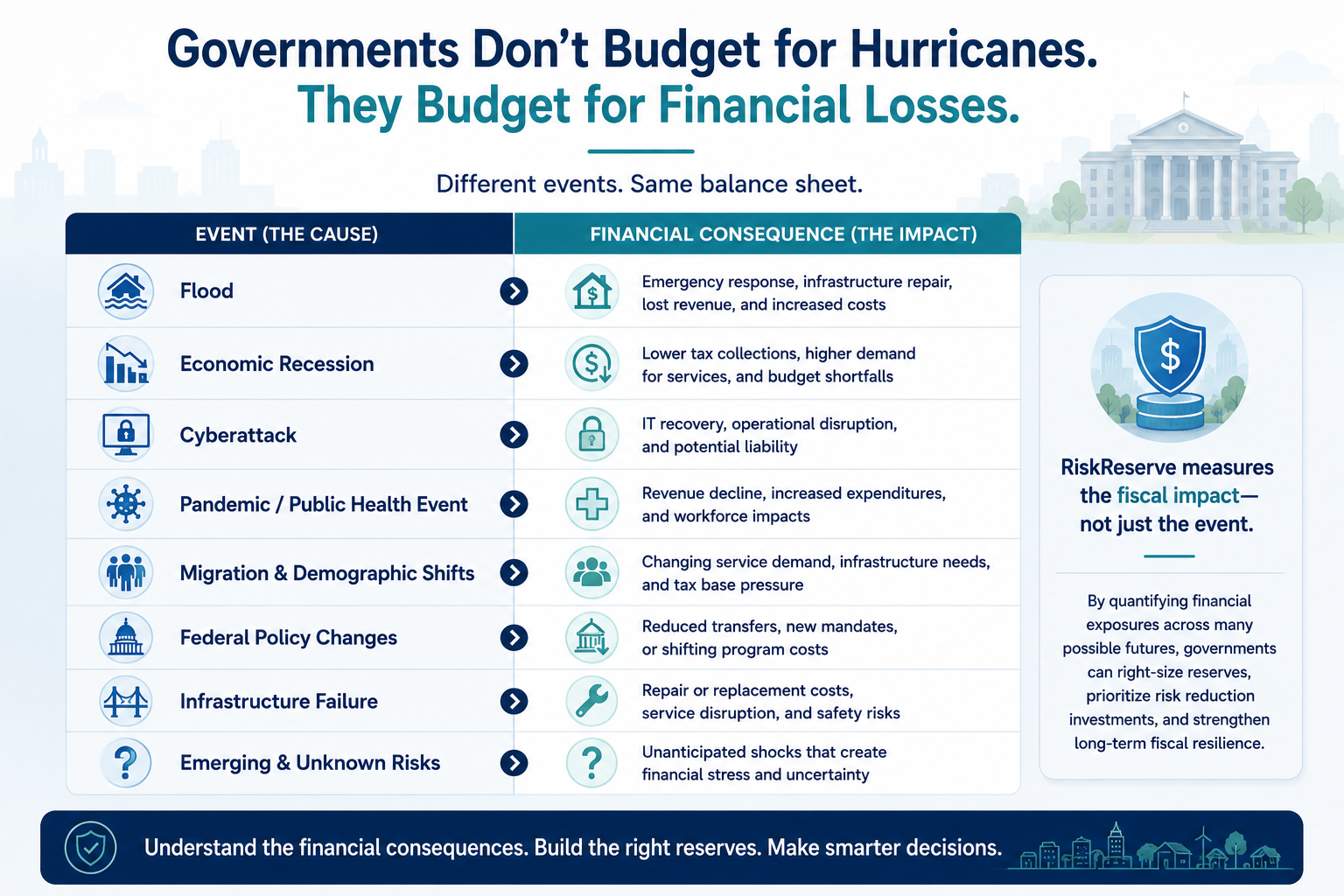
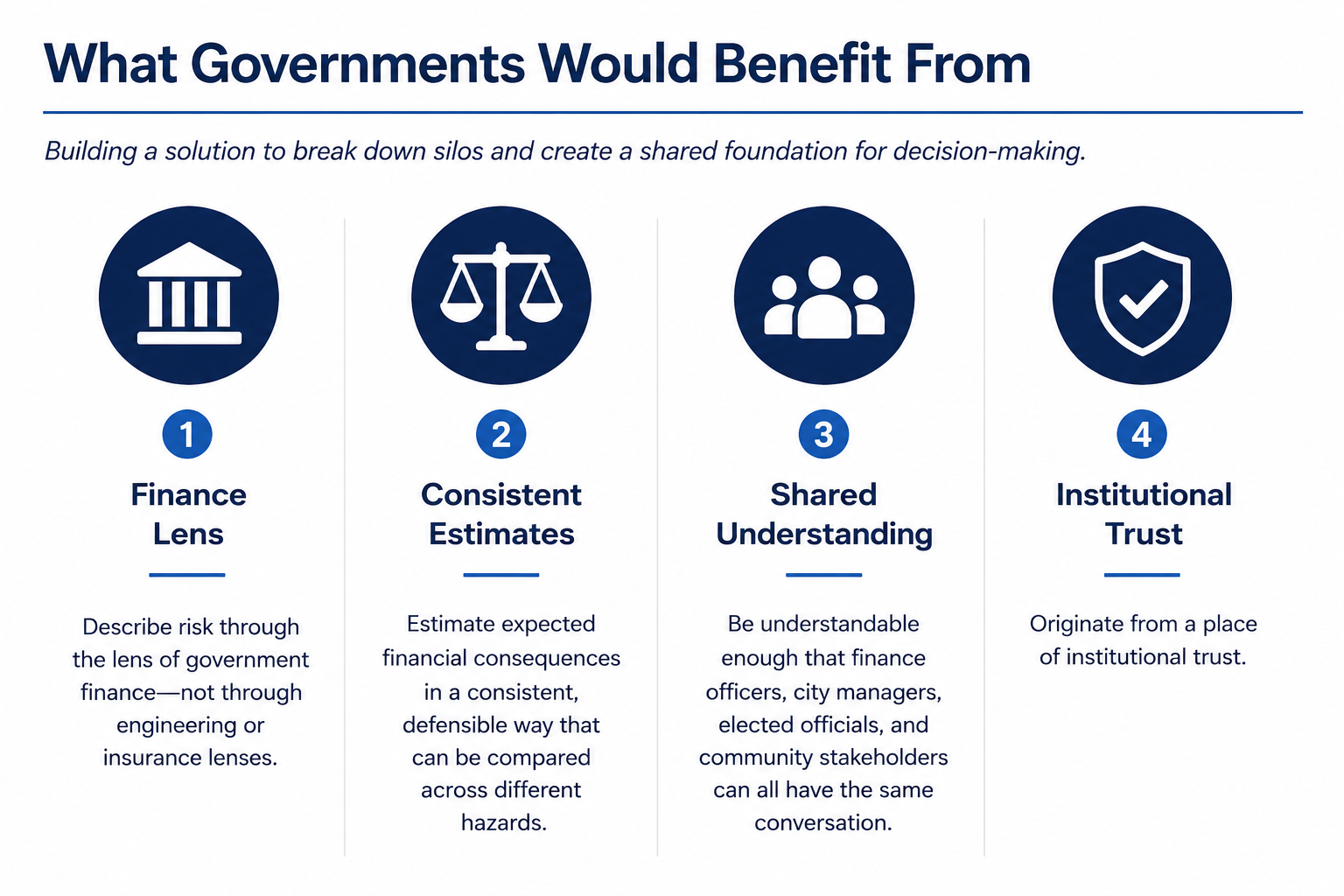
What are the characteristics of a data-centered approach to help government quantify financial liabilities of risk and use those data sets in decision-making?
